Must-Do Tasks Before Leaving for an International Trip in 2026
26 April 2026
So, you’ve finally done it. You’ve booked that international trip for 2026—the one you’ve been daydreaming about while staring at your office ceiling. Maybe it’s a two-week romp through Kyoto’s bamboo forests, a chaotic food tour of Mexico City, or a “find myself” solo trek in Patagonia (where you’ll probably just find a lot of mud and existential questions). Congratulations! But before you start packing your emotional baggage and your favorite pair of socks, let me stop you right there.
Planning an international trip in 2026 is like assembling IKEA furniture without the instruction manual—it’s messy, confusing, and you’ll probably end up with a few extra screws you have no idea what to do with. The world has changed. Travel rules are shifting faster than a TikTok trend, and technology is both your best friend and that one friend who always asks to borrow money. So, grab a coffee (or something stronger), and let’s walk through the must-do tasks before you jet off into the wild blue yonder.
1. Check Your Passport’s Expiration Date—No, Seriously, Check It Twice
You’d think this is obvious, but you’d be surprised how many people show up at the airport looking like they just discovered their passport expired last Tuesday. In 2026, many countries require your passport to be valid for at least six months beyond your return date. That’s right—six months. So if your passport expires in April 2026 and you’re traveling in March, you’re basically holding a fancy bookmark.Pro tip: Renew your passport at least nine months before your trip. Government processing times are slower than a sloth on sedatives. And don’t even get me started on the photo requirements. Is that a shadow? Is that a smile? Is that your soul leaving your body? Just follow the rules, or you’ll end up with a passport photo that makes you look like a wanted fugitive.
Rhetorical question: Do you really want to explain to a customs officer why your passport photo looks like a mugshot from 2018? I didn’t think so.
2. Research Visa Requirements Like You’re Studying for a Final Exam
In 2026, visa rules are more tangled than a pair of earbuds in your pocket. Some countries now require e-visas, some have visa-on-arrival, and a few—bless their hearts—still want you to mail your physical passport to an embassy and pray it comes back before your flight.Here’s the catch: New digital nomad visas, remote work permits, and “digital traveler” programs are popping up everywhere. But don’t assume you’re exempt. Check the official government website (not that sketchy blog your cousin’s friend recommended) for the latest requirements. And for the love of all that is holy, do this at least three months ahead. Nothing kills the travel buzz like an “entry denied” stamp on your passport.
Analogy: Applying for a visa without researching is like going to a potluck without checking what everyone else is bringing—you might end up with nothing but a sad bowl of plain rice.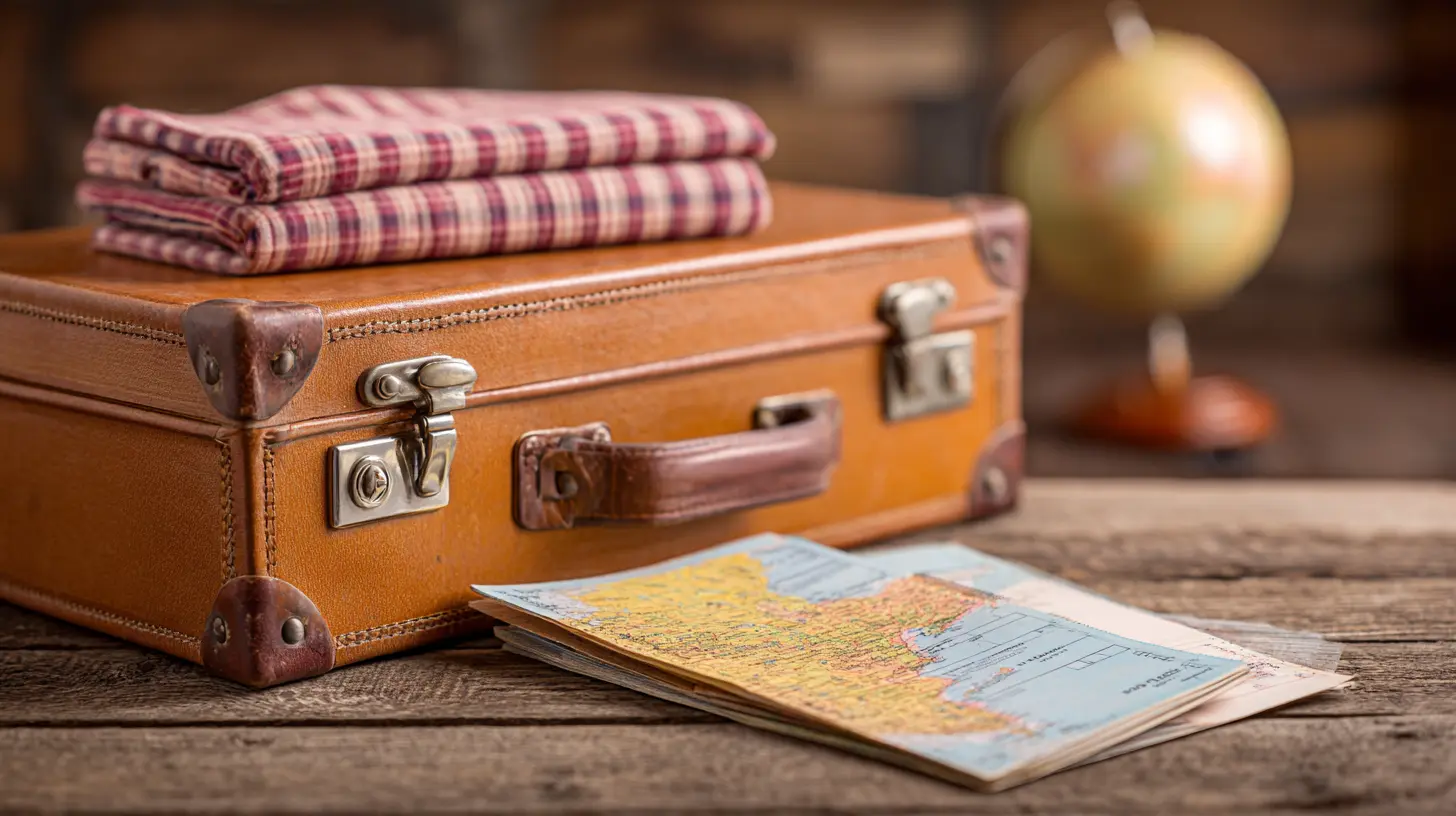
3. Get Your Tech Ready for the Digital Nomad Era
Let’s talk about your gadgets. In 2026, your phone is basically a Swiss Army knife with a battery life problem. Before you leave, do the following:- Unlock your phone: If your carrier has it locked, call them and demand freedom. You don’t want to pay $20 a day for roaming when you can get a local SIM for the price of a street taco.
- Download offline maps: Google Maps, Maps.me, or Citymapper—download entire regions. Because when you’re lost in a foreign city at 2 AM, data roaming is not your friend.
- Install translation apps: DeepL, Google Translate, or even a good old phrasebook app. You’ll thank yourself when you’re trying to order “chicken” and accidentally ask for “cow intestines” in a language you don’t speak.
- Back up everything: Cloud backup, external hard drive, or carrier pigeon—just do it. Losing your phone in a foreign country is like losing your brain in a blender.
Rhetorical question: Remember that time your phone died in the middle of a foreign city and you had to navigate using the stars and a vague memory of a map? Yeah, don’t do that again.
4. Sort Out Your Finances Like a Responsible Adult (Ugh, I Know)
Money makes the world go round, but international banking fees make it spin a little too fast. In 2026, contactless payments are king, but cash is still queen in many places. Here’s your financial pre-flight checklist:- Notify your bank and credit card companies: Tell them you’re traveling, or they’ll freeze your card faster than you can say “fraud alert.” And trust me, explaining to a bank robot that you’re actually buying that “antique camel saddle” in Morocco is a special kind of hell.
- Get a travel-friendly credit card: Look for one with no foreign transaction fees and good travel insurance. Chase Sapphire Preferred, Capital One Venture, or similar cards are your best friends. They’re like the cool aunt who gives you cash and doesn’t ask questions.
- Carry a mix of cash and cards: Have some local currency in your pocket when you land. Airport ATMs are notorious for charging fees that could feed a small village. And keep a backup card hidden in your sock or a secret pocket. Because Murphy’s Law says you’ll lose your wallet in the most inconvenient place—like a gondola in Venice.
Metaphor: Managing money abroad is like juggling flaming torches while riding a unicycle. One wrong move, and everything goes up in smoke.
5. Vaccinations and Health Prep—Because You’re Not Invincible
Listen, I know you think you’re immortal. You’re young, you’re vibrant, and you’ve got the immune system of a garbage truck. But 2026 is a whole new ballgame. Some countries now require proof of vaccinations for yellow fever, hepatitis, typhoid, or even COVID-19 boosters.Do this: Visit a travel clinic or your doctor at least 6–8 weeks before departure. They’ll give you a list of shots that sounds like a cocktail menu: “I’ll have one Hepatitis A, a side of Typhoid, and a booster for Tetanus, please.” Also, stock up on prescription meds—you don’t want to be hunting for a pharmacy in rural Vietnam at 3 AM because you forgot your allergy pills.
Don’t forget travel insurance. In 2026, medical evacuation can cost more than your entire trip. Get a policy that covers hospitalization, trip cancellation, and lost baggage. Because if your luggage ends up in Tokyo while you’re in Bali, at least you’ll have a good story and some compensation.
Rhetorical question: Do you really want to be that person who gets food poisoning in a foreign country and has to explain to a doctor using Google Translate that you ate “street meat” from a cart that looked like it hadn’t been cleaned since 1999?
6. Plan Your Itinerary with Flexibility (The Art of Controlled Chaos)
Here’s a hard truth: Overplanning is the enemy of joy. If you schedule every minute of your trip, you’ll end up stressed, exhausted, and possibly divorced from your travel buddy. In 2026, the best trips are those with a skeleton plan and a lot of wiggle room.What to plan:
- Major attractions and must-see spots (book tickets in advance to skip lines).
- Accommodation for the first few nights (so you’re not sleeping in a train station).
- A few restaurant recommendations (because hangry is a real travel emotion).
What not to plan:
- Every single meal, bathroom break, and Instagram photo opportunity. Leave room for spontaneity. Maybe you’ll meet a local who invites you to a secret beach. Maybe you’ll stumble into a festival you never knew existed. Maybe you’ll spend an entire afternoon just watching pigeons in a plaza—and that’s okay.
Analogy: A travel itinerary should be like a jazz song—structured enough to follow, but loose enough to improvise.
7. Learn Key Phrases (Even If You Sound Like a Toddler)
You don’t need to be fluent in the local language. But knowing a few phrases can save your bacon. Learn how to say:- “Hello” and “Thank you” (basic manners, people).
- “Where is the bathroom?” (critical).
- “I’m allergic to peanuts” (life-saving).
- “How much does this cost?” (budget-saving).
- “One more beer, please” (hydration, obviously).
Pro tip: Use apps like Duolingo or Memrise for quick lessons. And don’t be afraid to sound silly. Locals actually appreciate the effort. They’ll laugh at your accent, but they’ll also help you find the nearest toilet.
Rhetorical question: Would you rather butcher the pronunciation of “excuse me” or end up accidentally buying a live chicken at a market? I thought so.
8. Pack Like a Minimalist Who’s Also Prepared for a Zombie Apocalypse
Packing is a delicate art. In 2026, airlines are charging for everything—checked bags, carry-ons, and probably the air you breathe soon. So pack light, but pack smart.The golden rule: Lay out everything you think you need, then put half of it back. You’re not moving abroad. You’re going on a trip. You don’t need three pairs of jeans for a week in Thailand.
Essentials:
- A power bank (because your phone will die at the worst moment).
- A universal adapter (outlets in 2026 are still a global mess).
- A reusable water bottle with a filter (save money, save the planet).
- A small first-aid kit (band-aids, antiseptic, painkillers, and anti-diarrhea meds—trust me).
- A scarf or sarong (doubles as a blanket, towel, pillow, or emergency headwrap).
Metaphor: Packing for a trip is like making a sandwich—you want enough ingredients to be satisfying, but not so many that it falls apart in your hands.
9. Get Your Digital House in Order (Because You’re Not a Cave Dweller)
Before you leave, spend an hour doing digital housekeeping. It’s boring, but it’s necessary.- Set up two-factor authentication on your email and banking apps. Hackers love targeting travelers.
- Share your itinerary with a trusted friend or family member. Send them copies of your passport, visa, and travel insurance. If you go missing, at least someone knows where you were supposed to be.
- Download essential apps: Ride-sharing, food delivery, maps, translation, and local transport apps. Do this before you leave, because airport Wi-Fi is often slower than a dial-up connection from 1998.
- Turn off data roaming on your phone unless you’re using a local SIM. Otherwise, you’ll return home to a phone bill that could fund a small space program.
Rhetorical question: Do you really want to explain to your credit card company why there’s a $500 charge for “data usage” from a country you only visited for a layover?
10. Embrace the Chaos and Let Go of Perfection
Finally, the most important task: accept that something will go wrong. It always does. Your flight might get delayed. Your luggage might end up in a different continent. You might get lost, eat something weird, or have a meltdown in a foreign supermarket because you can’t find your favorite brand of toothpaste.And that’s okay. In fact, that’s the whole point of travel. The best stories come from the mishaps. The time you missed the last bus and had to hitchhike with a farmer. The time you accidentally ordered a whole fish with its eyes still staring at you. The time you got locked out of your Airbnb and had to sleep in a hammock under the stars.
Final thought: In 2026, travel is not about perfection. It’s about presence. It’s about stepping off the plane, taking a deep breath of foreign air, and saying, “I have no idea what’s going to happen, and I’m totally okay with that.”
So go ahead. Book that flight. Pack your bags. Forget your worries. The world is waiting, and it’s weirder, wilder, and more wonderful than you can imagine.
all images in this post were generated using AI tools
Category:
Travel ChecklistsAuthor:

Ian Powell
Discussion
rate this article
1 comments
Hawk McMahan
Great advice—planning ahead truly turns travel stress into pure excitement. 2026 is your year to explore with confidence and joy! 🌍✈️
April 29, 2026 at 4:49 PM
Ian Powell
Thanks for the encouragement! Excited for all the adventures ahead in 2026.